California Golden Bears Athletics
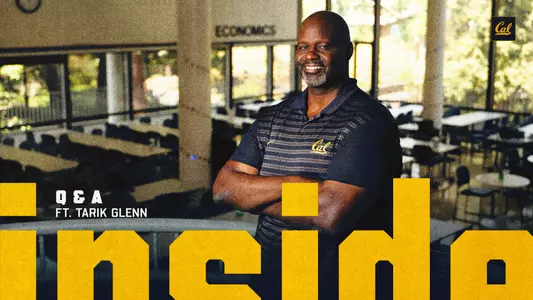
Tarik Glenn serves Cal's student-athletes on their journeys to academic success in Berkeley.
Photo by: Kelley L Cox/KLC fotos
Q&A With Tarik Glenn
10/1/2026 1:00 PM | Football, Inside The Lair, Inside Cal Football
Former NFL First-Round Pick Now Leads Cal's Athletic Study Center
Tarik Glenn brings a lengthy list of credentials into his job as the Executive Director of Cal's Athletic Study Center.
A four-year letterman at Cal who began his college career as a defensive lineman before switching to offensive tackle, Glenn was a first-round pick by the Indianapolis Colts in the 1997 NFL draft.
In 10 seasons with the Colts, Glenn played in 167 games, including playoffs – and he started in all 167. He retired after the 2006 season, his third straight as a Pro Bowl selection, following the Colts' 29-17 win over the Chicago Bears in Super Bowl XLI on Feb. 4, 2007.
He was inducted into the Colts' Ring of Honor in 2022 and the Cal Athletics Hall of Fame in 2024.
Glenn, 50, received a bachelor's degree in social welfare from Cal in 1999 and an MBA from Purdue in 2025.
Since returning to his alma mater in 2014, Glenn has gone from being a student-athlete development advisor to these roles in the Academic Study Center: assistant director (2015-20), deputy director (2020-24), interim executive director (2024-25) and executive director (2025-present).
What follows are excerpts from an interview in his office Tuesday. Some questions and answers have been edited for clarity and brevity. We begin with Glenn's description of what he does in his role as the executive director:
T.G.: First of all, our center has been charged by this campus to provide an academic hub for student-athletes, for development, for advocacy and for campus engagement. And, my job is to make sure that athletics, faculty, administration all understand the complexities that come with the student-athlete experience. … (We're) making sure that our student-athletes have the resources and the support necessary so that they can not only graduate, but really maximize the experience that you'd want a student to have at Berkeley.
S.K.: It was a different time (when you were a student-athlete), but the fact that you can relate to what the football player, the volleyball player, baseball player, whoever (is going through), how much does that inform you in your job today?
T.G.: I think lived experience is a big part of what prepares you for different challenges that you have in life. I happen to have a job where my lived experience really provides an informed perspective of what our student-athletes are going through, but I think it's really amplified now that social media is involved and digital technology.
I always tell the student-athletes that when I was here, there were no cell phones. People didn't have laptops. You had to go to the computer center. I wrote out my papers and typed 'em out. I didn't go on the computer to register for classes. There was TeleBears, where you called and registered over the phone.
So, there are just fundamental changes that come with time and evolution, but I think the general sentiment and the overall experience of being at a rigorous institution while at the same time trying to actualize and realize your athletic goals all are the same.
There are two competing goals where if you can accomplish both, there's a lot of benefit that comes with that. But the journey is difficult. It's not for the faint of heart. And it requires grit and perspective.
I just had a conversation with a student-athlete today, about fighting through the hard pays off when you don't give up. Because when you look back, you recognize that these moments really give you the substance that you need to take on the different issues of life.
S.K.: This one might be hard for you to step back from but … what do you think is a bigger cachet in the presence of students: the fact that you've gone through it here or the fact that you played 10 years in the league?
T.G.: I think, obviously, playing 10 years in the league definitely is a huge shock factor because there are just very few people ever who have done that. So, I think that gives me a lot of social capital with our student-athletes to know that I've done some exceptional things athletically, whether it's playing 10 years or winning a Super Bowl. … I don't lead with that. I don't wear that on my sleeve, but at the same time, I think that when it comes to really trying to make points or capture attention or really trying to connect, I do leverage those lived experiences because I know that our student-athletes put a lot of value on those type of athletic accomplishments.
S.K.: How does the satisfaction of doing a good job as the head of the study center compare with blocking for Peyton (Manning) and winning a Super Bowl?
T.G.: I think working in the college-athletic space – similar to being a professional athlete – is not for the faint of heart. (There are) problems that are going to come to your desk and people are looking for you to solve the problems.
The thing that is similar about the nature of what I do now versus what I did then is just being someone who solves problems. Some of that's competitive. I was just sharing with somebody today that I look at some of these problems that seem to most as almost impossible things to overcome at Cal as an opportunity to do something new and different. I just take it on as a challenge. I haven't won every battle, but at the same time, I've won a lot of 'em. And I think that that's what's made this job rewarding, because there are constantly challenges that I have to motivate a staff to be willing to take on and making sure that we stay true to the mission that we've been called to and that they align with our values.
I think that that's easier said than done, but I think that that concept is an athletic concept where I've taken those transferable skills and just applied them to this workspace.
S.K.: Take me back almost 30 years now, you're going into the league. What are one or two things you learned at Cal – either on the football field or in the classroom – that really helped you on and off the field in the NFL?
T.G.: A pivotal moment for me at Cal is when in my true-freshman fall semester, I got put on academic probation because I was under a 2.0 GPA. That was a very embarrassing situation that I put myself into because … I didn't really take the academic side of the experience seriously.
It forced you to doubt, "Man, academically, can I actually even do it here?" I happened to get hurt my true-freshman year. I hurt my neck. Initially, they were saying, "This could be an injury that you have to medically retire for." It was almost a wakeup call to say, "Man, this football thing may not work out like I thought." I needed to see if I could make something out of this experience. So, I really put my best foot forward and utilized the resources and support that this place had to offer through the Athletic Study Center. And from that, I went from a 1.8 GPA to a 3.4 GPA, and it was in that spring of 1994, I recognized and realized that, actually, I can do this. This isn't beyond my abilities – and I gained a confidence about parts of who I was that I didn't necessarily knew existed.
Taking that experience, it just reminds me of trusting the process. … The process is going to lead to success if I have foundations and fundamentals that I know lead to a successful outcome. I experienced that as a scholar and then took those same principles and applied them to my game.
I wasn't the most athletic. I wasn't the most physically gifted, but I feel like … I was really coachable and fundamentally, I trusted the process.
S.K.: Give me two or three examples of (student-athletes) whose academic/athletic careers over the past X number of years you've elevated. You've made those people better than they thought they could be.
T.G.: I wouldn't say specific people, but what I will say is this: We started a student-athlete transition course, this department did, when I got here. … We created almost like a 17-week orientation. We introduce student-athletes to resources that this campus has. We do a lot of self-assessments so they get to learn more about who they are, who they want to be – and then come up with some smart goals on how they want to live out their legacy on this campus.
I think my greatest reward of working here is having those students come back and tell me how impactful making them take the time to reflect, to map out and forecast how to maximize this experience and then be able to live it out – and how impactful that was for them. It goes not just for the football players that I've worked with, but in all sports.
I'm not an adviser. I'm not a learning specialist. I don't have those student touch points, but that is the one time that I get to involve myself in the initial experience. Really trying to make sure that student-athletes are setting realistic expectations for themselves. Self-advocacy is really important for me, so they know how to go on this campus and really tell their story and advocate for themselves and get the most out of this experience.
To know that that conversation, that curriculum, that experience has impacted students makes me feel like I've contributed a little bit to their student-athlete experience.
S.K.: I certainly get the sense that this place means a lot to you – how and why?
T.G.: I would say that this place means a lot to me because I feel like this place reminds me of having an older brother who loves his younger brother but shows (that) love by making that little brother's life experience very, very hard, but he's making that life experience very, very hard for his little brother so that he can kick butt in life.
And I feel like this place will evoke a lot of emotions in you when you go here, when you work here, as a parent that sent their kid to school here, but my overall general sentiment and takeaway about this place (is) if you don't quit, it prepares you for life. I've gotten to a place in life where I think the most important thing you can do as a young person is embrace hard. … Once you recognize that life is hard, now it's about what's going to be my approach to taking on this hard and understanding that it's going to come with my best effort? I think that this place does that to you when you are willing to embrace the fact that it's going to be hard – and that you're going to be willing to fight and you're not going to give up.
A four-year letterman at Cal who began his college career as a defensive lineman before switching to offensive tackle, Glenn was a first-round pick by the Indianapolis Colts in the 1997 NFL draft.
In 10 seasons with the Colts, Glenn played in 167 games, including playoffs – and he started in all 167. He retired after the 2006 season, his third straight as a Pro Bowl selection, following the Colts' 29-17 win over the Chicago Bears in Super Bowl XLI on Feb. 4, 2007.
He was inducted into the Colts' Ring of Honor in 2022 and the Cal Athletics Hall of Fame in 2024.
Glenn, 50, received a bachelor's degree in social welfare from Cal in 1999 and an MBA from Purdue in 2025.
Since returning to his alma mater in 2014, Glenn has gone from being a student-athlete development advisor to these roles in the Academic Study Center: assistant director (2015-20), deputy director (2020-24), interim executive director (2024-25) and executive director (2025-present).
What follows are excerpts from an interview in his office Tuesday. Some questions and answers have been edited for clarity and brevity. We begin with Glenn's description of what he does in his role as the executive director:
T.G.: First of all, our center has been charged by this campus to provide an academic hub for student-athletes, for development, for advocacy and for campus engagement. And, my job is to make sure that athletics, faculty, administration all understand the complexities that come with the student-athlete experience. … (We're) making sure that our student-athletes have the resources and the support necessary so that they can not only graduate, but really maximize the experience that you'd want a student to have at Berkeley.
S.K.: It was a different time (when you were a student-athlete), but the fact that you can relate to what the football player, the volleyball player, baseball player, whoever (is going through), how much does that inform you in your job today?
T.G.: I think lived experience is a big part of what prepares you for different challenges that you have in life. I happen to have a job where my lived experience really provides an informed perspective of what our student-athletes are going through, but I think it's really amplified now that social media is involved and digital technology.
I always tell the student-athletes that when I was here, there were no cell phones. People didn't have laptops. You had to go to the computer center. I wrote out my papers and typed 'em out. I didn't go on the computer to register for classes. There was TeleBears, where you called and registered over the phone.
So, there are just fundamental changes that come with time and evolution, but I think the general sentiment and the overall experience of being at a rigorous institution while at the same time trying to actualize and realize your athletic goals all are the same.
There are two competing goals where if you can accomplish both, there's a lot of benefit that comes with that. But the journey is difficult. It's not for the faint of heart. And it requires grit and perspective.
I just had a conversation with a student-athlete today, about fighting through the hard pays off when you don't give up. Because when you look back, you recognize that these moments really give you the substance that you need to take on the different issues of life.
S.K.: This one might be hard for you to step back from but … what do you think is a bigger cachet in the presence of students: the fact that you've gone through it here or the fact that you played 10 years in the league?
T.G.: I think, obviously, playing 10 years in the league definitely is a huge shock factor because there are just very few people ever who have done that. So, I think that gives me a lot of social capital with our student-athletes to know that I've done some exceptional things athletically, whether it's playing 10 years or winning a Super Bowl. … I don't lead with that. I don't wear that on my sleeve, but at the same time, I think that when it comes to really trying to make points or capture attention or really trying to connect, I do leverage those lived experiences because I know that our student-athletes put a lot of value on those type of athletic accomplishments.
S.K.: How does the satisfaction of doing a good job as the head of the study center compare with blocking for Peyton (Manning) and winning a Super Bowl?
T.G.: I think working in the college-athletic space – similar to being a professional athlete – is not for the faint of heart. (There are) problems that are going to come to your desk and people are looking for you to solve the problems.
The thing that is similar about the nature of what I do now versus what I did then is just being someone who solves problems. Some of that's competitive. I was just sharing with somebody today that I look at some of these problems that seem to most as almost impossible things to overcome at Cal as an opportunity to do something new and different. I just take it on as a challenge. I haven't won every battle, but at the same time, I've won a lot of 'em. And I think that that's what's made this job rewarding, because there are constantly challenges that I have to motivate a staff to be willing to take on and making sure that we stay true to the mission that we've been called to and that they align with our values.
I think that that's easier said than done, but I think that that concept is an athletic concept where I've taken those transferable skills and just applied them to this workspace.
S.K.: Take me back almost 30 years now, you're going into the league. What are one or two things you learned at Cal – either on the football field or in the classroom – that really helped you on and off the field in the NFL?
T.G.: A pivotal moment for me at Cal is when in my true-freshman fall semester, I got put on academic probation because I was under a 2.0 GPA. That was a very embarrassing situation that I put myself into because … I didn't really take the academic side of the experience seriously.
It forced you to doubt, "Man, academically, can I actually even do it here?" I happened to get hurt my true-freshman year. I hurt my neck. Initially, they were saying, "This could be an injury that you have to medically retire for." It was almost a wakeup call to say, "Man, this football thing may not work out like I thought." I needed to see if I could make something out of this experience. So, I really put my best foot forward and utilized the resources and support that this place had to offer through the Athletic Study Center. And from that, I went from a 1.8 GPA to a 3.4 GPA, and it was in that spring of 1994, I recognized and realized that, actually, I can do this. This isn't beyond my abilities – and I gained a confidence about parts of who I was that I didn't necessarily knew existed.
Taking that experience, it just reminds me of trusting the process. … The process is going to lead to success if I have foundations and fundamentals that I know lead to a successful outcome. I experienced that as a scholar and then took those same principles and applied them to my game.
I wasn't the most athletic. I wasn't the most physically gifted, but I feel like … I was really coachable and fundamentally, I trusted the process.
S.K.: Give me two or three examples of (student-athletes) whose academic/athletic careers over the past X number of years you've elevated. You've made those people better than they thought they could be.
T.G.: I wouldn't say specific people, but what I will say is this: We started a student-athlete transition course, this department did, when I got here. … We created almost like a 17-week orientation. We introduce student-athletes to resources that this campus has. We do a lot of self-assessments so they get to learn more about who they are, who they want to be – and then come up with some smart goals on how they want to live out their legacy on this campus.
I think my greatest reward of working here is having those students come back and tell me how impactful making them take the time to reflect, to map out and forecast how to maximize this experience and then be able to live it out – and how impactful that was for them. It goes not just for the football players that I've worked with, but in all sports.
I'm not an adviser. I'm not a learning specialist. I don't have those student touch points, but that is the one time that I get to involve myself in the initial experience. Really trying to make sure that student-athletes are setting realistic expectations for themselves. Self-advocacy is really important for me, so they know how to go on this campus and really tell their story and advocate for themselves and get the most out of this experience.
To know that that conversation, that curriculum, that experience has impacted students makes me feel like I've contributed a little bit to their student-athlete experience.
S.K.: I certainly get the sense that this place means a lot to you – how and why?
T.G.: I would say that this place means a lot to me because I feel like this place reminds me of having an older brother who loves his younger brother but shows (that) love by making that little brother's life experience very, very hard, but he's making that life experience very, very hard for his little brother so that he can kick butt in life.
And I feel like this place will evoke a lot of emotions in you when you go here, when you work here, as a parent that sent their kid to school here, but my overall general sentiment and takeaway about this place (is) if you don't quit, it prepares you for life. I've gotten to a place in life where I think the most important thing you can do as a young person is embrace hard. … Once you recognize that life is hard, now it's about what's going to be my approach to taking on this hard and understanding that it's going to come with my best effort? I think that this place does that to you when you are willing to embrace the fact that it's going to be hard – and that you're going to be willing to fight and you're not going to give up.
Wednesday, September 30
Tuesday, September 29
Saturday, September 26
Friday, September 25