California Golden Bears Athletics
Small Changes, Big Impact: How Gender-Neutral Language Transformed My Experience on a Women's Swim Team
10/31/2023 8:00 AM | DEIBJ
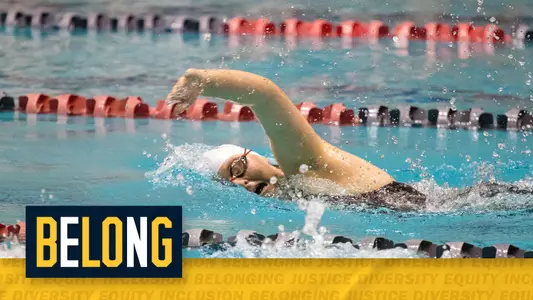
During my time on Willamette University's swim team, I often found myself feeling like an outsider during team huddles and meetings. It wasn't that I didn't feel included in the team, but rather that I struggled with the gendered language that was used to address us. As a non-binary person, it was difficult to be referred to as a "lady" or "woman" when my identity didn't align with those labels. It was a painful reminder that my identity didn't fit into the traditional gender binary, and at that point in my life, I thought I was just supposed to deal with it on my own.
One day, during an individual meeting with my coaches, I opened up about my struggles with feeling like an outsider. I knew they weren't purposefully trying to push me out, but I had to address the overwhelming feeling of being othered. My coaches were incredibly understanding and empathetic, but they mentioned they weren't sure how to be supportive. We talked about potential alternatives to addressing the team and eventually landed on the term "peeps." While it may seem like a silly word, the seemingly small change marked a powerful shift for me. The feeling of being seen and appreciated for who I am was overwhelming. It was a powerful reminder that every little change counts.
My coaches showed me that changing everyday language didn't have to be confrontational or complicated. We could easily use gender-neutral language in any setting. We explored different ways to address the team, but to this day, my coach still uses "Bearcats" and "peeps."
The change in language may seem small, but it made a huge difference in how I felt as a member of the team. I no longer felt like an outsider or that my identity was being erased. Instead, I felt seen and appreciated for who I am. It was a powerful reminder that small changes can have a significant impact.
As the season progressed, I noticed that my teammates also began to use more gender-neutral language. It wasn't a forced change but rather a natural shift that occurred as we became more aware of the impact of our words. As a team, we decided to be "members of a women's team" rather than women on a team. We knew that we were not going to be able to change the title of our team, but we could change how we addressed ourselves. Even my teammates, who are women, joined me in calling themselves members of the women's team. It was a beautiful thing to witness, making me feel even more connected to my team.
Looking back on that experience, I am grateful for my coaches' willingness to listen and make changes. It can be challenging to confront gendered language, especially in athletics settings where tradition and culture can be intense. However, my coaches showed me that change is possible and can be done in a respectful and kind way.
The experience also taught me the importance of speaking up and advocating for myself. Sharing your struggles with others can be scary, but it is often the first step towards creating change. By being open and honest with my coaches, I made a difference not just for myself but for my entire team. Even years after I graduated, I know of current team members who can fully embrace their identity without backlash from the team or athletic department because I was able to advocate for myself.
In the end, the power of language is undeniable. Our words can either include or exclude, uplift or tear down. By choosing to use gender-neutral language, we are creating a more inclusive and welcoming environment for everyone. It's a small change, but it can make a huge difference in how people feel about themselves and their place in the world.
Mika Costello is an Assistant Director, Compliance, in Cal Athletics.
One day, during an individual meeting with my coaches, I opened up about my struggles with feeling like an outsider. I knew they weren't purposefully trying to push me out, but I had to address the overwhelming feeling of being othered. My coaches were incredibly understanding and empathetic, but they mentioned they weren't sure how to be supportive. We talked about potential alternatives to addressing the team and eventually landed on the term "peeps." While it may seem like a silly word, the seemingly small change marked a powerful shift for me. The feeling of being seen and appreciated for who I am was overwhelming. It was a powerful reminder that every little change counts.
My coaches showed me that changing everyday language didn't have to be confrontational or complicated. We could easily use gender-neutral language in any setting. We explored different ways to address the team, but to this day, my coach still uses "Bearcats" and "peeps."
The change in language may seem small, but it made a huge difference in how I felt as a member of the team. I no longer felt like an outsider or that my identity was being erased. Instead, I felt seen and appreciated for who I am. It was a powerful reminder that small changes can have a significant impact.
As the season progressed, I noticed that my teammates also began to use more gender-neutral language. It wasn't a forced change but rather a natural shift that occurred as we became more aware of the impact of our words. As a team, we decided to be "members of a women's team" rather than women on a team. We knew that we were not going to be able to change the title of our team, but we could change how we addressed ourselves. Even my teammates, who are women, joined me in calling themselves members of the women's team. It was a beautiful thing to witness, making me feel even more connected to my team.
Looking back on that experience, I am grateful for my coaches' willingness to listen and make changes. It can be challenging to confront gendered language, especially in athletics settings where tradition and culture can be intense. However, my coaches showed me that change is possible and can be done in a respectful and kind way.
The experience also taught me the importance of speaking up and advocating for myself. Sharing your struggles with others can be scary, but it is often the first step towards creating change. By being open and honest with my coaches, I made a difference not just for myself but for my entire team. Even years after I graduated, I know of current team members who can fully embrace their identity without backlash from the team or athletic department because I was able to advocate for myself.
In the end, the power of language is undeniable. Our words can either include or exclude, uplift or tear down. By choosing to use gender-neutral language, we are creating a more inclusive and welcoming environment for everyone. It's a small change, but it can make a huge difference in how people feel about themselves and their place in the world.
Mika Costello is an Assistant Director, Compliance, in Cal Athletics.
Tuesday, February 06
Tuesday, October 11
Monday, January 03